

Dr. Marco Ha · Author and medical reviewer
General, pediatric and trauma surgery · Last medically reviewed
DIRECT ANSWER
Tirzepatide cannot guarantee “fat only” weight loss; protein plus resistance exercise is the core muscle-preservation strategy
Tirzepatide lowers appetite and increases fullness, so some people eat too little protein, energy, micronutrients or fluid. Weight lost is not all fat, but a fall in “lean mass” is not identical to pure muscle loss. In practice, distribute protein across meals, combine at least two days of resistance work with adequate aerobic activity, and follow waist, strength, mobility and body-composition trends. Protein ranges such as 1.2–1.6 g/kg/day are often discussed, but the correct denominator and safe target depend on lean or adjusted weight, kidney function, age, activity and nutritional status.
What are tirzepatide and Mounjaro?
Tirzepatide is a once-weekly dual GIP/GLP-1 receptor agonist. In Taiwan it is commonly marketed as Mounjaro; Taiwan FDA information states that approved uses now include glucose control and weight control in obesity or overweight, while the current local label still determines who qualifies. Tirzepatide affects appetite and metabolic pathways, increases fullness, lowers energy intake and influences gastric emptying. Delayed gastric emptying is particularly relevant when starting or escalating treatment.
In SURMOUNT-1, adults with overweight or obesity without diabetes received lifestyle intervention plus tirzepatide for 72 weeks. Mean weight change ranged from −15.0% to −20.9% by dose, compared with −3.1% for placebo. These are research averages, not personal promises or a dosing guide. Real-world outcomes also depend on tolerability, persistence, disease, nutrition and activity.
Why does lean mass fall during weight loss, and is it all muscle?
Meaningful weight loss commonly reduces both fat and lean mass. Lean mass includes skeletal muscle, organs, connective tissue, bone and water; it is not synonymous with muscle. In the SURMOUNT-1 DXA substudy, roughly three quarters of weight lost with tirzepatide was fat mass and one quarter was lean mass, a proportion broadly seen in other forms of weight loss. A group average does not define an individual.
The clinically important concern is avoidable loss of muscle, strength and function, particularly in older adults, people with low muscle at baseline, prolonged inactivity, very rapid loss, inadequate energy or protein, chronic illness or repeated restrictive dieting. One body-fat-scale reading is not enough. Chair rise, walking speed, grip, lifting and daily function are often more meaningful.
Why does lower appetite require more nutrition planning?
Early fullness helps reduce energy intake, but it does not automatically select enough protein, iron, vitamin B12, vitamin D, calcium or fluid. A person who lives on small amounts of low-nutrient snack food or cannot drink because of nausea may develop fatigue, constipation, dizziness, dehydration, nutritional inadequacy and functional decline.
The quality goal is not “eat as little as possible.” It is to obtain sufficient nutrition from a smaller volume. Meal, movement and adverse-effect plans work best before initiation or dose escalation rather than after weakness or excessive weight loss appears.
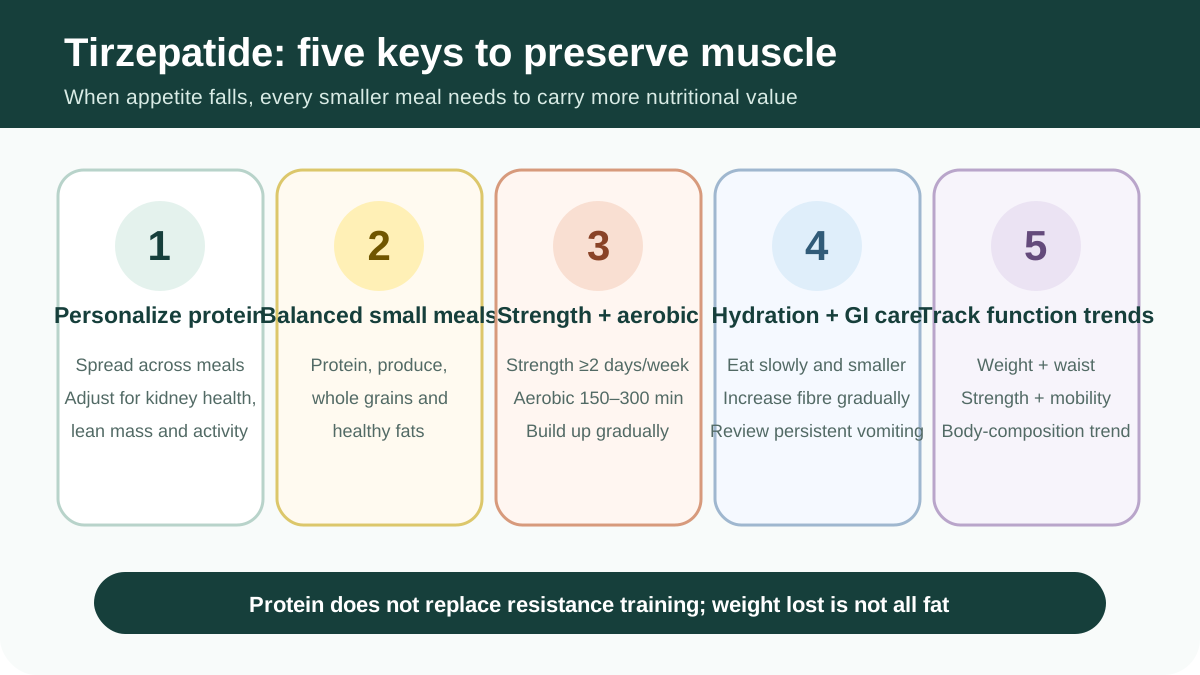
Key 1: get enough protein—but do not simply multiply current body weight by 1.6
A 2025 joint advisory from four professional societies emphasizes adequate protein and resistance exercise during GLP-1-based therapy. Practical approaches include about 1.2–1.6 g/kg/day, about 1.5 g/kg of lean mass/day or an absolute 80–120 g/day target. The advisory also makes clear that no single calculation is established as best.
At a higher BMI, multiplying actual weight by 1.6 may substantially overestimate need. A dietitian may use target weight, adjusted weight or measured lean mass instead. Chronic kidney disease, proteinuria, liver disease, gout, pregnancy, older age with sarcopenia or malnutrition changes the safe target; a generic online formula should not replace individual care.
How can protein be distributed?
- Give each meal a clear protein anchor, such as eggs, fish, chicken, unsweetened yogurt, tofu, soy milk or edamame.
- If volume is limited, use three smaller meals plus one or two small snacks rather than forcing a large portion at once.
- Eating protein first does not make vegetables, whole grains or fruit optional; the whole pattern still matters.
- If solid food remains inadequate, discuss a suitable, clearly labeled supplement with a dietitian rather than stacking multiple products.
Key 2: keep meals balanced; carbohydrates do not need to disappear
Carbohydrate supplies energy for training and daily movement. Eliminating rice, grains, starchy vegetables, fruit and legumes can reduce exercise performance, fiber and micronutrient intake and may be difficult to sustain. Favor whole grains, oats, sweet potato, legumes and other minimally processed sources, adjusting quantity to glucose, activity and total energy needs.
A practical small meal combines a protein source, vegetables or fruit, an appropriate amount of whole grain or starchy vegetable, and a small amount of healthy fat. During nausea or early fullness, reduce portion size, eat slowly and avoid a large fried or high-fat meal. There is no required “detox meal” on injection day.
Key 3: resistance exercise protects function; aerobic activity protects cardiometabolic health
WHO advises adults to accumulate 150–300 minutes of moderate aerobic activity, or 75–150 minutes of vigorous activity, each week, plus muscle-strengthening work for major muscle groups on at least two days. A sedentary person or someone with joint or cardiopulmonary disease does not need to reach the full target in week one. Start with another 5–10 minutes of walking, chair rises, wall push-ups or bands and progress.
- Resistance: include squat or chair rise, push, pull, hip hinge, calf raise, trunk and grip patterns on at least two days, with recovery between sessions.
- Aerobic: brisk walking, cycling, swimming or another safe, repeatable option; short sessions can accumulate.
- Progression: stabilize technique before adding repetitions, resistance or time. Stop and seek assessment for chest pain, fainting or abnormal breathlessness.
Protein cannot replace mechanical stimulus to muscle, and exercise cannot correct prolonged severe undernutrition. Both belong in the plan.
Key 4: manage fluid, constipation and gastrointestinal effects
Nausea, early fullness, bloating, belching, reflux, diarrhea and constipation are common, especially when starting or escalating. Helpful first steps include:
- reduce meal size, slow eating and stop at comfortable fullness;
- avoid a single large fried, high-fat, alcoholic or very spicy intake;
- sip fluid throughout the day rather than waiting to drink a large amount at once;
- increase produce, whole grains and other fiber gradually with adequate fluid and movement; suddenly adding very coarse fiber during severe bloating can worsen discomfort;
- contact the prescribing team when symptoms impair food or fluid intake instead of escalating rapidly or adding medicines without review.
Key 5: track waist, strength and function—not weight alone
| Measure | What it helps answer | Practical note |
|---|---|---|
| Weight and rate of loss | Overall trend and whether loss may be excessive | Use similar timing and clothing; daily hydration shifts are not treatment failure. |
| Waist | Trend in central adiposity | Use the same site, posture and respiratory phase. |
| Strength and function | Whether muscle still performs useful work | Track chair rise, walking, stairs, grip or a consistent exercise task. |
| Body composition | Estimated fat and lean-mass trends | Home bioimpedance changes with hydration; use the same device and similar conditions. |
| Food and symptoms | Whether protein and fluid are adequate and which foods trigger symptoms | A few days of records often helps a clinician or dietitian adjust care. |
Rapid loss accompanied by marked weakness, falls, declining exercise performance, hair loss, menstrual change, dizziness or inability to eat should prompt reassessment of energy, protein, iron and other nutrients, dosage and underlying disease.
Which effects can be monitored, and which require urgent care?
| Situation | Possible features | Action |
|---|---|---|
| Common and mild | Temporary nausea, early fullness, bloating, constipation or diarrhea while able to eat and drink | Use smaller slow meals, hydrate and discuss at follow-up; contact sooner if worsening. |
| Pancreas or gallbladder warning | Persistent or severe upper-abdominal pain, pain to the back, repeated vomiting, fever, right-upper-quadrant pain or jaundice | Seek urgent assessment and do not self-administer an extra dose. |
| Dehydration or severe GI problem | Unable to drink, low urine, marked dizziness, persistent vomiting, severe distension or no stool/gas | Contact the care team urgently or attend emergency care. |
| Hypoglycemia | Sweating, tremor, palpitations or confusion, especially with insulin or a sulfonylurea | Follow the established hypoglycemia plan and contact the team; altered consciousness is an emergency. |
| Severe allergy | Swelling of face, lips, tongue or throat; breathing or swallowing difficulty | Emergency care immediately. |
Who needs special assessment or should not use tirzepatide?
The current Taiwan label governs contraindications and warnings. Important checks commonly include a personal or family history of medullary thyroid carcinoma, multiple endocrine neoplasia syndrome type 2 (MEN2), serious tirzepatide hypersensitivity, pregnancy or pregnancy plans, severe gastric-emptying problems, pancreatitis or gallbladder history, kidney function, diabetic retinopathy, insulin or sulfonylurea use, and other GLP-1-based medicine. Do not stack two “weight-loss injections” on your own.
Before surgery, endoscopy or deep sedation, tell the prescribing clinician, proceduralist and anesthesia team. Stopping should not be based on a fixed online interval alone; the team considers dose escalation, nausea or gastric-emptying symptoms and procedural aspiration risk.
Tirzepatide, fat loss and muscle FAQ
Does everyone lose muscle on tirzepatide?
Weight loss usually includes fat and some lean mass, but lean mass is not all skeletal muscle and the proportion differs. Adequate nutrition, resistance exercise, an appropriate rate of loss and functional monitoring can reduce the risk of clinically important muscle and strength loss.
How much protein should I eat while taking tirzepatide?
There is no universal number. A 2025 multi-society advisory discusses practical ranges such as 1.2–1.6 g/kg/day or 80–120 g/day, but the denominator may be adjusted weight or lean mass. Kidney disease, liver disease, older age or malnutrition require individualized medical or dietitian advice.
Should I eliminate carbohydrates while taking tirzepatide?
Usually no. Whole grains, starchy vegetables, legumes and fruit provide energy for activity, fiber and micronutrients. Total amount, quality and tolerance matter more than eliminating all carbohydrate.
Can a high-protein diet preserve muscle without exercise?
It cannot guarantee preservation. Protein supplies building material, while resistance exercise provides an essential stimulus to maintain muscle and strength. Both should be adapted for pain, cardiopulmonary disease and baseline fitness.
What can help nausea or constipation on tirzepatide?
Try smaller meals, slower eating, avoiding a large high-fat meal, adequate fluid and gradually increasing fiber. Persistent vomiting, inability to drink, low urine, severe abdominal pain or marked distension needs prompt medical contact.
Can a home body-fat scale tell whether I am losing muscle?
A home bioimpedance scale is affected by hydration, food and exercise, so a single reading is imprecise. Use similar conditions to follow trends and combine it with waist, grip or lifting performance, walking and daily function.
When should I seek urgent care while using tirzepatide?
Seek urgent care for persistent or severe abdominal pain, pain radiating to the back, repeated vomiting or dehydration, jaundice or fever, severe hypoglycemia, breathing difficulty or swelling of the face or tongue.
Should tirzepatide be stopped before surgery or endoscopy?
Do not decide alone. Tirzepatide can affect gastric emptying. Tell the prescribing clinician, proceduralist and anesthesia team before surgery, endoscopy or deep sedation so they can account for symptoms, dose escalation and procedural risk.
Medical review and sources
Written and medically reviewed by Dr. Marco Ha. Last updated September 1, 2026. This page is general education for follow-up preparation and does not replace individualized prescribing, nutrition assessment or exercise prescription.
- Taiwan FDA: GLP-1-based weight-control medicines and safety notice (2026)
- SURMOUNT-1: Tirzepatide in adults with obesity
- SURMOUNT-1 DXA substudy: Body-composition change with tirzepatide
- ACLM/ASN/OMA/TOS: 2025 joint advisory on nutrition during GLP-1 therapy
- World Health Organization: Adult aerobic and muscle-strengthening activity
- U.S. FDA: Tirzepatide weight-management safety labeling (the Taiwan label governs locally)
How sources are selected, reviewed and corrected: Medical editorial and sourcing policy.